Stainless Steel 304 vs 316: Which Grade Do You Need?
Published 25 November 2026 · Teck Leong Industries Pte Ltd.
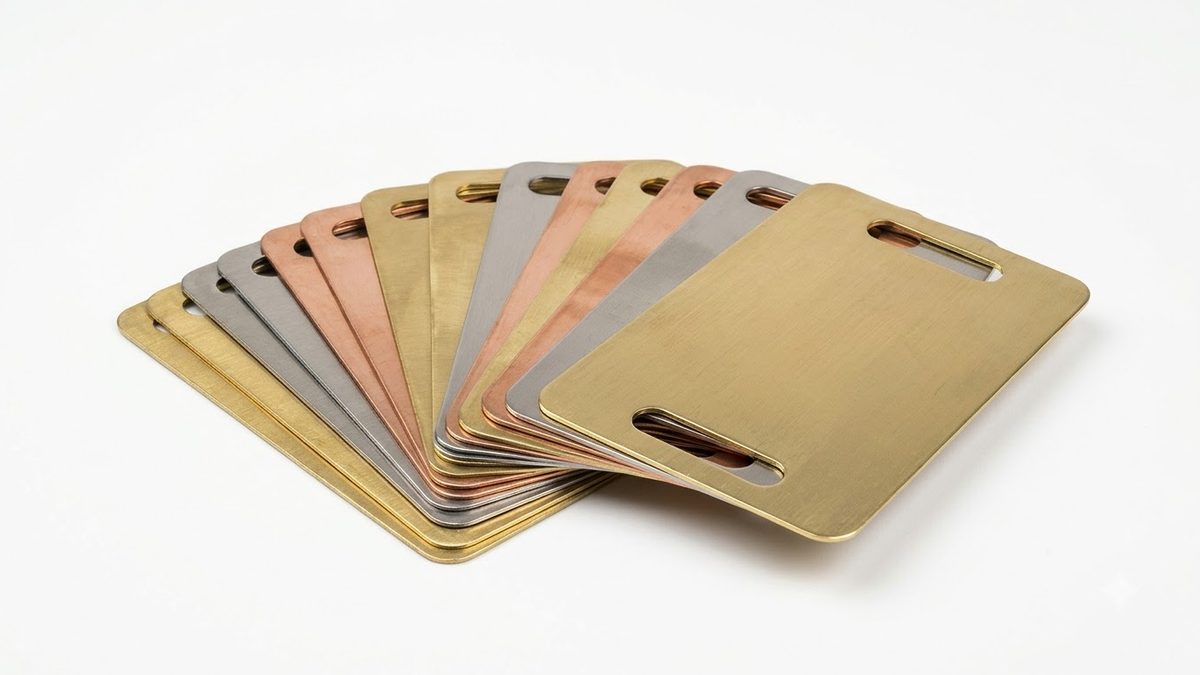
Stainless steel 304 and 316 are the two grades people ask about most. They look alike, and both are used across domestic, commercial and industrial work, but they behave differently when the environment turns corrosive. The key difference is molybdenum: 316 contains molybdenum (Mo), which improves resistance to pitting and crevice corrosion, especially in chloride-containing environments, while 304 is the most commonly used grade with versatile applications. Choosing the wrong grade can mean a part that does not last as long as it should, so it is worth knowing what sets them apart before you order. This guide explains the difference, the low-carbon L grades, and how to choose, so you can specify the right grade for your project.
What is the difference between 304 and 316?
Stainless steel 304 is the most commonly used grade. It is slightly magnetic in the drawn condition (annealed 304 is non-magnetic; it becomes slightly magnetic after cold drawing/working), can be welded, and is suitable for polishing and corrosive environments. It is used widely in a variety of domestic and commercial applications. Typical applications are tanks and containers for holding a large variety of liquids and solids, architectural paneling, railings and trim, chemical containers, heat exchangers, food processing equipment, and the domestic tool industry.
Stainless steel 316 and 316L contain molybdenum (Mo) that improves resistance to pitting and crevice corrosion. They are more resistant to general corrosion and pitting than conventional nickel chromium stainless steels such as 302-304. For example, stainless steel cylinders and tanks manufactured in 316 grade are used in acidic and hard water areas. Other areas of application are the chemical and pharmaceutical industry, surgical and medical tools, ozone generators, and petroleum refining equipment.
In short: 304 covers general domestic and commercial use, while 316 is the grade to consider when the environment is more corrosive, acidic, or hard water, or where pitting is a concern.
| Grade | Key point | Typical use |
|---|
| 304 | Most commonly used; versatile; can be welded; suitable for polishing | Tanks and containers for liquids and solids, architectural paneling, railings and trim, chemical containers, heat exchangers, food processing equipment, domestic tools |
| 316 | Contains molybdenum (Mo); more resistant to general corrosion and pitting | Cylinders and tanks in acidic and hard water areas, chemical and pharmaceutical industry, surgical and medical tools, ozone generators, petroleum refining equipment |
What about 304L and 316L?
The letter L stands for low carbon. Stainless steel 304L has lower carbon than the standard 304 grade, with a maximum of 0.03% carbon. It does not require post-weld annealing and is extensively used in heavy gauge components over about 6mm.
Stainless steel 316L also has a maximum of 0.03% carbon and is resistant to sensitization in short-term exposures or heat treatments. Most standard 316 grade stainless steel has a maximum of 0.08% carbon and is suitable for use in non-welded parts and equipment. In welded applications, standard 316 parts are used for light gauge application.
So when a part will be welded, the L grade is the low-carbon option to ask about. When a part will not be welded, standard 316 is suitable for use in non-welded parts and equipment.
How do I choose between 304 and 316?
Follow the project drawings or your consultant's specification first, then consider the environment and the welding involved.
- Check the specification first. The project drawings or your consultant usually name the grade. If a grade is named, use it.
- Think about the environment. For acidic or hard water areas, and where pitting is a concern, 316 is the grade noted as more resistant to general corrosion and pitting than 304. For general domestic and commercial use, 304 is the most commonly used grade.
- Think about welding. If the part will be welded, the L grades (304L and 316L) are the low-carbon option, with a maximum of 0.03% carbon. 304L does not require post-weld annealing. Standard 316, with a maximum of 0.08% carbon, is suitable for non-welded parts, and in welded applications it is used for light gauge application.
- Match the form to the job. Stainless steel is available as sheet and plate, round bars, angle bar, square bar, hexagon bar, U channel, ornamental tube and pipe, schedule pipe, checkered plate, perforated sheet, strips and coils, dividing strip and shim plates. Stainless steel 304/304L wire is also supplied — see the Wire range. Choose the form that fits the part you are making, then confirm the grade and size.
Stainless steel from a Singapore stockist
Teck Leong Industries Pte Ltd. supplies stainless steel sheets, rods and coils in Singapore. Forms include shim plates, round bars, angle bar, square bar, hexagon bar, U channel, ornamental tube and pipe, schedule pipe, sheet and plate, checkered plate, perforated sheet, strips and coils, dividing strip and wire. You can browse the stainless steel range, see the stainless steel 304 shim plate and stainless steel 316L shim plate, or ask us about sizes, availability and a quote.
Ready to order? Send us an enquiry with the grade, form and size you need, and ask about availability and a quote.
---
Frequently asked questions
What is the main difference between 304 and 316 stainless steel?
316 contains molybdenum (Mo), which improves resistance to pitting and crevice corrosion. 316 is more resistant to general corrosion and pitting than conventional nickel chromium stainless steels such as 302-304. 304 is the most commonly used grade.
When should I choose 316 instead of 304?
When the environment is acidic or hard water, or where pitting is a concern. Cylinders and tanks in 316 grade are used in acidic and hard water areas.
What is the difference between 304 and 304L?
304L has lower carbon than standard 304, with a maximum of 0.03% carbon. It does not require post-weld annealing and is extensively used in heavy gauge components over about 6mm.
How do I request a quote for stainless steel?
Send your requirements through the Enquiry page.