Brass vs Bronze: What's the Difference?
Published 25 November 2026 · Teck Leong Industries Pte Ltd.
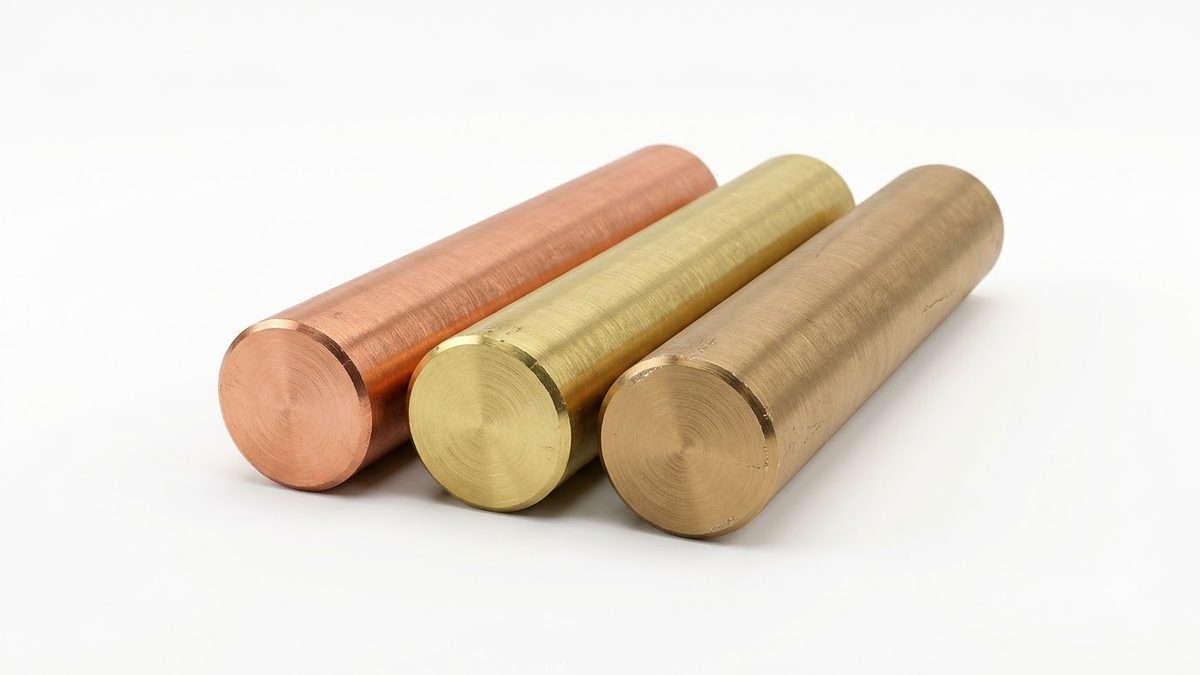
Brass and bronze are the two copper alloys people ask about most. Brass fittings are corrosion-resistant pipe fittings for plumbing and industrial use; bronze fittings and flanges are supplied to ANSI B16.18 and B16.24. They are not the same metal, and the difference matters most where sea water or chemical exposure is involved — check the specification for the alloy and grade. This guide explains what sets them apart, the grades available, and how to choose, so you can specify the right one for your project.
What is the difference between brass and bronze?
Brass is built on copper and zinc (naval brass adds a small amount of tin). Bronze in this guide is the copper.asia bronze family — lead tin bronze, phosphor bronze and nickel-aluminium-bronze — whose main alloying element is tin or aluminium, not zinc, although lead tin bronze C83600 also contains 4.0–6.0% zinc.
Free-Machining Brass — UNS C36000, JIS C3604 (CuZn39Pb3) — is the same free-machining brass family under two standards. JIS C3604 lists Cu 57.0%–61.0%, Pb 1.8%–3.7%, with zinc as the balance; UNS C36000 lists Cu 60.0%–63.0%, Pb 2.5%–3.7%, with zinc as the balance. Confirm which standard the drawing calls for before ordering. Naval Brass C46400 is a copper-zinc alloy with a small tin addition that resists seawater corrosion.
Bronze is a different family. Lead Tin Bronze C83600, BC6 and LG2 is also called Gunmetal or Lead Gunmetal, and lead is added to improve machinability. Phosphor Bronze C5191 uses a tin addition, which gives advantages in salt water and similar aggressive moist conditions, with corrosion resistance at least equal to copper. Nickel-Aluminium-Bronze Plate C6301 (JIS H3100 C6301; Cu 77.00–84.00%, Al 8.50–10.50%, Fe 3.50–6.00%, Mn 0.50–2.00%, Ni 4.00–6.00%) is described on copper.asia as a high-strength, wear-resistant plate with excellent corrosion resistance, for high-strength applications involving corrosion, heavy loads and abrasive wear.
In short: brass is copper and zinc, while bronze covers lead tin bronze, phosphor bronze and nickel-aluminium-bronze, each with its own mix and use.
| Metal | What it is | Typical use |
|---|
| Brass | A copper-zinc alloy; Naval Brass C46400 has a small tin addition (Sn 0.5–1.0%) that improves resistance to corrosion and dezincification, particularly in salt water | Corrosion-resistant brass pipe fittings for plumbing and industrial use, in BSP and NPT pipe thread |
| Bronze | Lead tin bronze (C83600, BC6, LG2 / Gunmetal), phosphor bronze C5191, nickel-aluminium-bronze | Bronze fittings and flanges to ANSI B16.18 and B16.24. By alloy — Lead Tin Bronze C83600: hydraulic components, valve seats, slide valves, gears, worm wheels, crusher bearings. Phosphor Bronze C5191: gears, worm wheels, landing gear parts, bridge bearing plates, clutch discs, electronic components. Nickel-Aluminium-Bronze C6301: aircraft, pressure vessels, condensers, heat exchangers, oil and gas exploration, tanks, structural members, gears, propellers and ship propellers. |
What grades are available?
For brass, the grades on the site include Naval Brass — UNS C46400, with the JIS rod grade C4641 listed alongside it on copper.asia. It is a copper-zinc alloy with a deliberate tin addition (Sn 0.5–1.0%) to give improved resistance to corrosion and dezincification, particularly in salt water and marine environments. C46400 and C4641 share the same Cu and Sn ranges; their Pb and Fe maxima differ (Pb max. 0.2% vs 0.5%). Free-Machining Brass — UNS C36000, JIS C3604 (CuZn39Pb3): JIS C3604 lists Cu 57.0%–61.0% and Pb 1.8%–3.7%, with zinc as the balance; UNS C36000 lists Cu 60.0%–63.0% and Pb 2.5%–3.7%, with zinc as the balance.
For bronze, the grades include Lead Tin Bronze C83600, BC6 and LG2, also called Gunmetal or Lead Gunmetal, where lead is added to improve machinability, which increases, although not proportionately, with higher lead content (Sn, Zn and Pb each 4.0–6.0%, Cu balance); Phosphor Bronze C5191, where the tin addition gives advantages in salt water and similar aggressive moist conditions, with corrosion resistance at least equal to copper (JIS C5191: Sn 5.5–7.0%); and Nickel-Aluminium-Bronze Plate C6301, a high-strength, wear-resistant plate with excellent corrosion resistance, for high-strength applications involving corrosion, heavy loads and abrasive wear.
How do I choose between brass and bronze?
Follow the project drawings or your consultant's specification first, then consider the environment and the fitting involved.
- Check the specification first. The project drawings or your consultant usually name the alloy or grade. If one is named, use it.
- Think about the environment. For sea water and chemical exposure, nickel-aluminium-bronze plate C6301 is described as a high-strength plate with excellent corrosion resistance, and phosphor bronze C5191 has advantages in salt water and similar aggressive moist conditions. Naval brass C46400 is a copper-zinc alloy with a small tin addition that gives improved resistance to corrosion and dezincification, particularly in salt water — let the specification decide for immersed service.
- Think about machining. Lead tin bronze (C83600, BC6 and LG2) has lead added to improve machinability, which matters when the part needs to be machined to shape.
- Match the fitting to the job. Brass pipe fittings are available in BSP and NPT pipe thread, in types such as sleeves, nuts, bushings, caps, connectors, unions, crosses, inserts, elbows, lock nuts, nipples, plugs, sockets and tees. Bronze fittings and flanges are to ANSI B16.18 and B16.24 in BSP and NPT threads, in types such as elbows, bushings, caps, couplings/sockets, crosses, lock nuts, nipples, plugs, reducers, street elbows, street tees, tees, unions and flanges. Choose the type and thread that fit the pipework, then confirm the alloy and grade.
Brass and bronze from a Singapore stockist
Teck Leong Industries Pte Ltd. supplies brass and bronze fittings in Singapore. Brass fittings are corrosion-resistant brass pipe fittings for plumbing and industrial use, with multiple types and sizes in stock, in BSP and NPT pipe thread. Bronze fittings and flanges are to ANSI B16.18 and B16.24 in BSP and NPT threads. You can browse the brass fittings types, see the bronze fittings and flanges, look at brass bushings, or ask us about sizes, availability and a quote.
Ready to order? Send us an enquiry with the alloy, grade, type and size you need, and ask about availability and a quote.
---
Frequently asked questions
What is the main difference between brass and bronze?
Brass is built on copper and zinc. Bronze includes lead tin bronze (C83600, BC6 and LG2), phosphor bronze C5191 and nickel-aluminium-bronze C6301, each with its own mix and use.
Which one is used for sea water?
Nickel-aluminium-bronze plate C6301 is a high-strength plate with excellent corrosion resistance, and phosphor bronze C5191 has advantages in salt water and similar aggressive moist conditions. Naval brass C46400 is a copper-zinc alloy with a small tin addition that gives improved resistance to corrosion and dezincification, particularly in salt water — let the specification decide for immersed service.
What is gunmetal?
Lead Tin Bronze C83600, BC6 and LG2 is also called Gunmetal or Lead Gunmetal. Lead is added to improve machinability.
How do I request a quote for brass or bronze fittings?
Send your requirements through the Enquiry page.